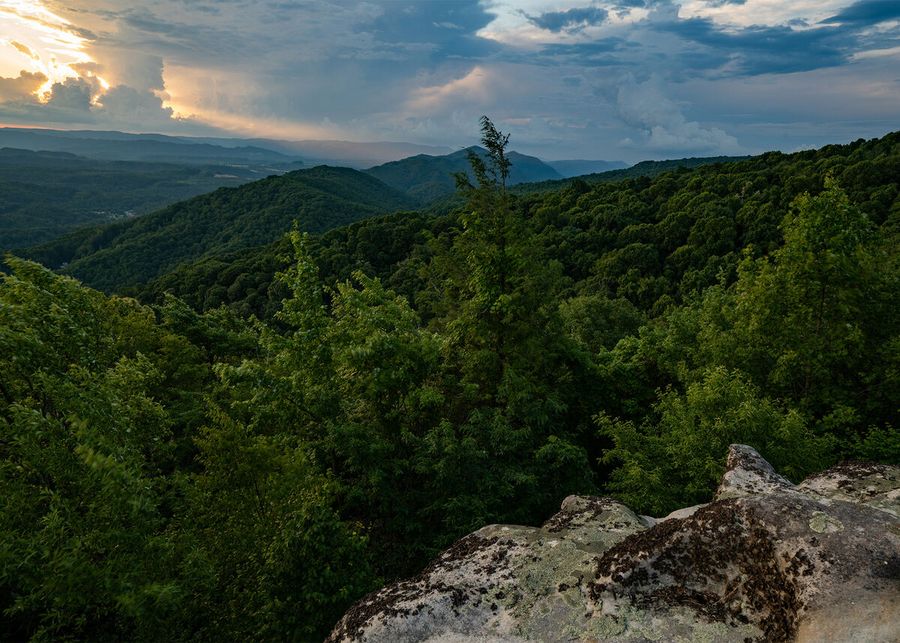
Layered green Appalachian ridges in Kentucky under a golden sky
Central & Southern Appalachians • Kentucky Hollers, Coves & Ridges

Appalachian Field Guide

Both of your mountain guides, now under one roof: the medicinal plants & fungi — with search by medical condition — and the edible plants & fungi, each with a color picture, where and how to find it, and the look-alikes that matter.

🌿 21 medicinal plants + 6 fungi & lichens🍽️ 35 edible plants + 9 edible fungi🩺 Search by condition📴 Works without signal once opened

🩺 What was traditionally used for it?

Type a condition — cold, cough, sleep, digestion, poison ivy — and see the medicinal plants and fungi traditionally linked to it, with cautions. Traditional knowledge, not medical advice.

⚠️ Safety lives at the front door

Some entries in both guides are here so you can avoid them. Read the safety notes before you taste or use anything, and never eat or use a plant or fungus you cannot identify with certainty.

⚠️ Safety first — this is a learning guide, not a prescription or a guarantee

  • “Traditionally used for” is not “proven to treat.” The medicinal section describes Appalachian, Indigenous, and folk herbal history. It is not medical advice, a diagnosis, or a dose — it gives no dosages on purpose.
  • Never eat or use a plant or fungus you cannot identify with 100% certainty — confirmed in at least two reliable field guides and, for fungi, with an experienced local identifier. Pictures here help you learn; they are never enough alone.
  • Herbs act like drugs: they interact with prescription medicines, pregnancy, surgery, liver and kidney conditions. Talk to a clinician or pharmacist before using any medicinal entry.
  • Some entries are here so you can avoid them. Bloodroot, mayapple root, pokeweed, and wild ginger carry serious toxicity and are marked “High caution — recognition only.”
  • If someone is ill after eating a wild plant or mushroom, call U.S. Poison Control right away: 1-800-222-1222. Keep a sample and photos of what was eaten.
🌿 Medicinal Plants & Fungi

An herbal field guide to the medicine plants and medicinal fungi of these mountains — alphabetical, every entry with a color picture, where and how to find it, how it was traditionally used and prepared, and what can be confused with it.

🩺 Search by condition — what was traditionally used for it?

Type a condition or symptom — cold, cough, inflammation, anxiety, digestion, pain, skin, sleep, memory, menopause — and this guide will show you the plants and fungi in it that were traditionally used for that concern, with a link to each full entry. It runs entirely inside this page, so it works offline.

Honest framing: a match means “people in this region traditionally used this plant for this” — not that it is proven, safe for you, or a substitute for care. Check each entry’s caution section, and ask a clinician about interactions before any use.

The medicinal catalog — alphabetical

Plants first (A–Z), then medicinal fungi and lichens (A–Z). Search by name, Latin name, place, or use. Every entry has a color picture — a real photograph, except American ginseng, where the photo could not be sourced and a labeled color illustration is used instead.

🌿 Medicinal plants — A to Z

🍄 Medicinal fungi & lichens — A to Z

No match in these woods.
Try a shorter word, or clear a filter above.

Gather medicine like a neighbor

Medicinal roots are the slowest, most vulnerable harvest in Appalachia. Ginseng and goldenseal patches have been dug out across whole counties.

Roots are a last resort

A root harvest usually kills the plant. Prefer leaves, flowers, and bark from pruned branches where tradition allows — and buy cultivated roots when you can.

Protected means protected

Kentucky regulates ginseng: season, minimum age (3-prong / 5+ years), replanting seeds, and dealer rules. Goldenseal is CITES-listed and at-risk. Know the current law before you dig anything.

Take little, leave the mothers

Never take more than a small fraction of a patch, leave the largest seed-bearing plants, and replant berries and seeds where you found them.

Fungi: leave some, spread spores

Cut rather than rip, carry in mesh, and leave older specimens. For chaga, take only a portion — the conk took years to grow and the birch still needs defending.

Danger corner — look-alikes that hurt people

These grow beside the medicine plants. If you cannot rule them out, do not pick.

Water Hemlock & Poison Hemlock

Tall white umbrella flowers near creeks and roadsides, purple-marked smooth stems. Both are deadly poisonous and are confused with yarrow, elderflower, and wild carrot relatives. Never taste-test any wild member of the carrot family.

False Turkey Tail & Other Thin Shelves

Many banded shelf fungi resemble turkey tail. True turkey tail is paper-thin and leathery with tiny white pores underneath — if it has gills, teeth, or a smooth underside, it is something else. Key it out pore by pore.

Deadly Galerina & Other Little Brown Mushrooms

Small brown mushrooms on wood can be deadly (Galerina marginata). They are one reason medicinal-fungi beginners should never generalize from “it grows on a log.” Identify to species, every time.

Foxglove Rosettes

First-year foxglove leaves resemble mullein and comfrey rosettes and contain heart-active compounds. Harvest mullein only from plants you have positively confirmed — ideally ones you watched flower.

🍽️ Edible Plants & Fungi

The edible side of the mountains — berries, greens, nuts, roots, flowers, and mushrooms — organized by kind, then A–Z, with the season, habitat, and the look-alikes that matter.

⚠ Read this before you taste anything

Never eat a wild plant or mushroom unless you are certain of its identification — ideally confirmed by an experienced local forager, a regional field guide, and more than one identifying feature (leaf, stem, habitat, season, and for fungi, a spore print).

For mushrooms, this rule is absolute: never eat a mushroom without certain identification. Several Appalachian fungi in the “deadly” list below can kill, and some have no antidote. When in doubt, leave it. Take photos, note the tree it grows near, and ask a local mycological club.

This guide is for learning and identification support. It is not a guarantee that any individual plant or mushroom you find is safe — conditions, look-alikes, pollution, and personal allergies vary. Try any new wild food cooked, in a small amount, one at a time.

Searchable catalog — edible plants & fungi

35 plants and 9 fungi, grouped by kind and listed A–Z inside each group. Every entry has a color picture — real photographs, except mayapple and groundnut, which are labeled color illustrations. Every entry also has a “Where and how to find it” note. Search by name, Latin name, season, or place — try “spring greens”, “fall nuts”, or “creek”. Everything runs inside this page, so search and pictures keep working with no signal.

The forager’s ground rules

The habits that keep people — and the plants — safe, season after season.

Identify with certainty

  • Use at least 3 features: leaf/flower shape, stem, habitat, season, smell, and tree partners for fungi.
  • Check the look-alike listed on every entry here before harvesting.
  • Never eat from a photo match alone.

Harvest kindly

  • Take no more than a third of a patch — less for slow growers like ramps.
  • Leave roots and bulbs where a leaf harvest is enough.
  • Never harvest on land without permission, or in protected areas where it’s not allowed.

Choose clean ground

  • Avoid roadsides, sprayed yards, mine land, and runoff areas.
  • Wash everything. Cook greens and mushrooms unless the entry says raw is traditional.
  • Watch for ticks and snakes in brambles and leaf litter.

First taste protocol

  • One new food at a time, cooked, a spoonful first.
  • Wait and see how you feel before eating more.
  • Keep a raw sample and a photo of anything new you try, just in case.

The Appalachian edible year

A quick map of when the main foods appear in the Kentucky mountains. Exact timing shifts with elevation and weather.

🌱 Spring

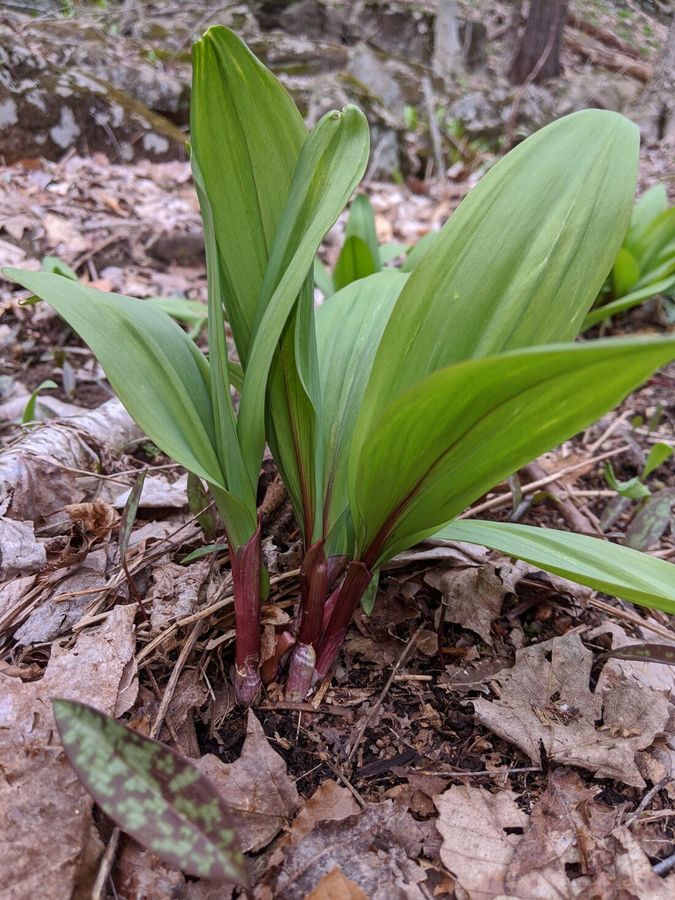
  • Ramps & wild onion
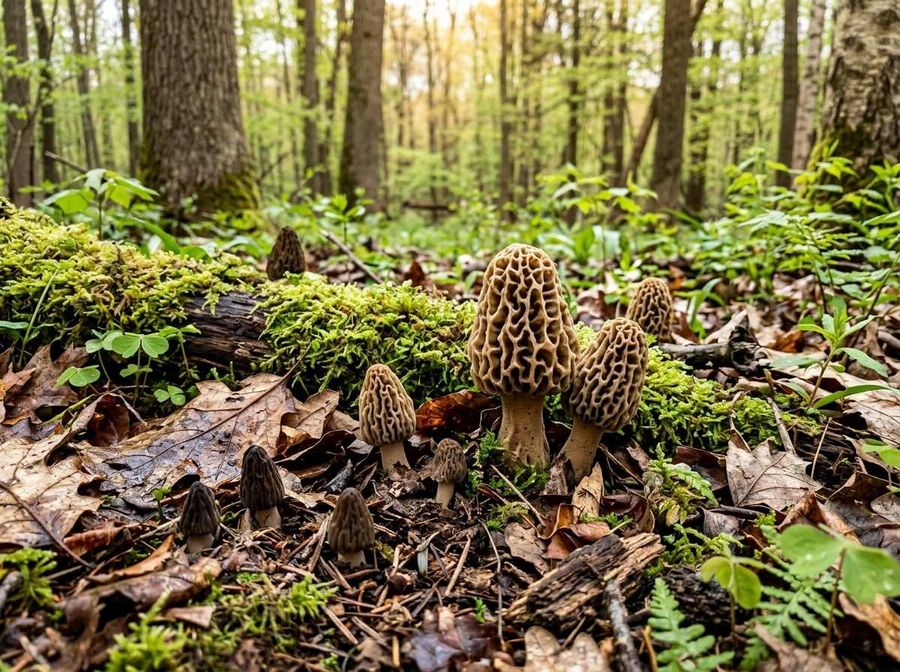
  • Morels & Dryad’s saddle
  • Stinging nettle (young)
  • Chickweed, violet, wood sorrel
  • Redbud & black locust flowers
  • Cattail shoots

☀️ Summer

  • Blackberries & raspberries
  • Serviceberries, blueberries
  • Chanterelles, black trumpets
  • Chicken of the woods
  • Purslane & lamb’s quarters
  • Sumac berries, wild grapes forming

🍂 Fall

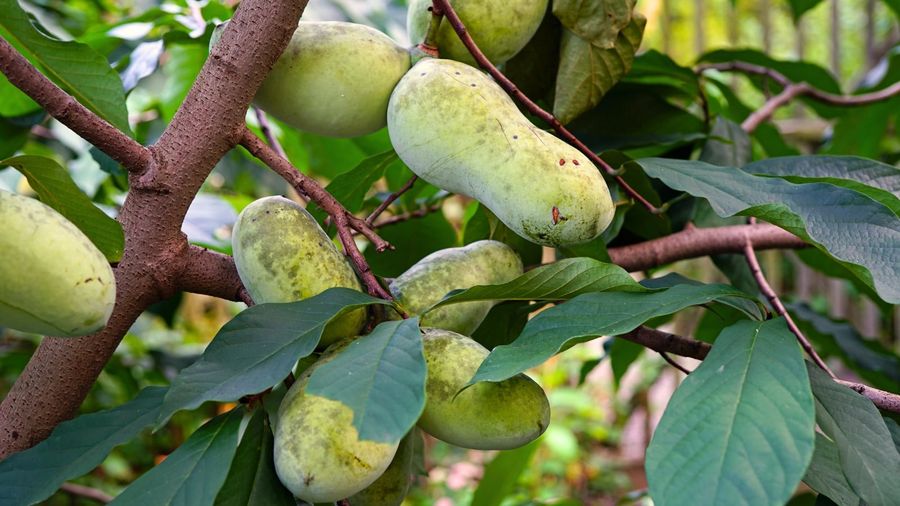
  • Pawpaw & persimmon
  • Hickory, walnut, hazelnut, acorns
  • Hen of the woods, lion’s mane
  • Puffballs & oyster mushrooms
  • Wild grapes ripe
  • Jerusalem artichoke & groundnut

❄️ Winter

  • Oyster mushrooms (mild spells)
  • Wintergreen leaves & berries
  • Cattail & burdock roots
  • Jerusalem artichoke (after frost)
  • Stored nuts & dried sumac
  • Spicebush twigs for tea

If you learn nothing else first, learn these — and their look-alikes.

Never confuse: the dangerous list

These grow in the same woods and fields as the edibles above. Learn them as carefully as the foods.

DangerousConfused withHow to tell / why it matters
False morels (Gyromitra, Verpa)True morelsCap is wrinkled or thimble-like, not neatly pitted; inside is chambered or stuffed, not fully hollow. Toxic — never eat.
Jack-o’-lantern (Omphalotus illudens)ChanterellesGrows in clusters on wood/buried roots, true thin blade-like gills, orange through and through. Causes severe GI poisoning.
Deadly Galerina (Galerina marginata)Honey mushrooms, small brown mushrooms generallySmall brown mushroom on wood with a rusty-brown spore print and a ring. Contains the same toxins as the death cap. Deadly.
Destroying angels & death cap (Amanita spp.)Puffballs, meadow mushroomsWhite gills, ring on stem, cup (volva) at base. A puffball must be cut open: if you see the outline of a mushroom inside, it’s an Amanita “egg” — discard it.
Poison hemlock (Conium maculatum)Wild carrot, parsley family plantsPurple-blotched smooth stems, musty smell, no hairs. All parts deadly. Never eat any white-flowered carrot-family wild plant without expert certainty.
Water hemlock (Cicuta maculata)Elderberry (habitat), wild parsnipWet ground, purple-streaked stem, chambered root. Among the most toxic plants in North America.
Pokeweed (Phytolacca americana)Spring greens (“poke sallet” tradition)Roots, mature stems, leaves, and berries are toxic. The traditional dish requires very young shoots and repeated boiling with water changes — treat as high-risk and skip it as a beginner.
Mayapple — unripeMayapple ripe fruitOnly the fully ripe, soft, yellow fruit flesh is traditionally eaten, in small amounts. Green fruit, leaves, roots, and seeds are toxic.
Poison sumac (Toxicodendron vernix)Smooth / staghorn sumacPoison sumac grows in swamps, has loose clusters of white berries hanging down. Edible sumacs have upright red berry cones and dry ground. White berries = never touch.
Moonseed (Menispermum canadense)Wild grapeMoonseed fruit has a single crescent-shaped seed and no tendrils; grapes have forked tendrils and several round seeds. Moonseed is toxic.
Virginia creeper berriesWild grapeFive-leaflet leaves and dark berries on red stems. Berries are toxic — grapes never grow with five-leaflet creeper leaves.
Foxglove & other garden escapesComfrey, mullein (leaf stage)Heart toxins in all parts. A reminder to never ID a plant by leaves alone.
If someone eats a plant or mushroom you can’t identify: call Poison Control (US: 1-800-222-1222) right away, keep a sample and photos of what was eaten, and note the time and symptoms. Don’t wait for symptoms to get serious.

Keep learning locally

The best foraging knowledge in Appalachia is local and hands-on.

  • Walk with people first: Kentucky and Appalachian foraging and mushroom clubs run guided walks where IDs are checked in hand — worth more than any app.
  • Cross-check every find in two regional references (for example, a Peterson or Audubon field guide for plants, and a dedicated mushroom guide for fungi) before it goes in the basket.
  • Keep a simple journal: date, place, tree partners, photos from above, below, and the side. For fungi, add a spore print. Patterns across seasons are how certainty is built.
  • Know the rules where you walk: state parks, national forest, and private land each have their own gathering rules — check before you harvest.